The Face on Mars Was a Trick of the Light
In 1976 a NASA orbiter photographed what looked like a giant face on Mars. Sharper cameras showed what it really is.
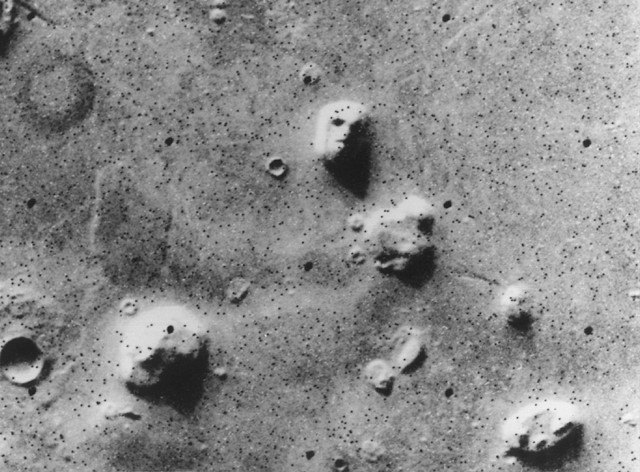
On 25 July 1976, NASA's Viking 1 orbiter photographed the Cydonia region of Mars from 1,873 kilometres up. One hill, lit by a low afternoon sun, looked like a human face staring up from the surface.
NASA's own caption described it as a rock formation whose shadows give the illusion of eyes, nose and mouth. Even so, the picture became famous, and some claimed it was a monument built by Martians.
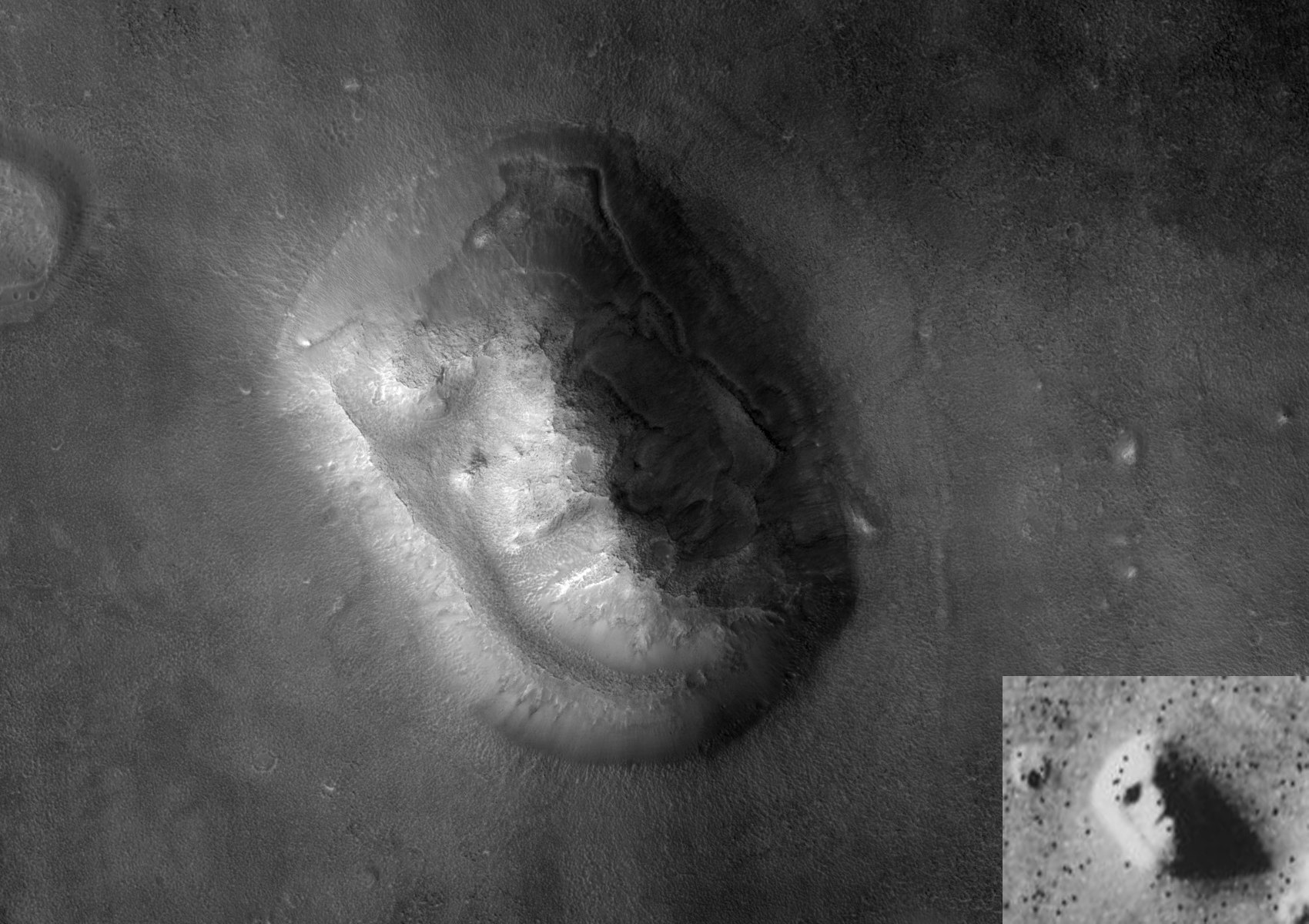
NASA's Mars Global Surveyor photographed the area again: in April 1998 at 4.3 metres per pixel, and on 8 April 2001, in clear air, at 1.56 metres per pixel. Viking's view had been about 43 metres per pixel.
In the sharper pictures, the face disappears. What remains is an eroded, flat-topped hill, one of many in the region.
Exhibit A: the same hill, seen sharply
Evidence
- NASA's 1976 caption already explained the face as shadows on an eroded mesa.
- Mars Global Surveyor's 2001 image is more than 25 times sharper than Viking's and shows no artificial features.
What do you think happened?
You have the evidence. Stamp your verdict before you read ours.
Verdict
CONFIRMEDBacked by strong, verifiable evidence.
Confirmed natural landform. The face came from a low-resolution photo and low sunlight, plus the human habit of seeing faces in shapes.
How readers voted
Theories vs evidence
A monument built by intelligent beings
RULED OUTHigh-resolution images show an ordinary eroded hill.
A natural hill shaped by erosion, lit at a low angle
SUPPORTEDEvery sharper image confirms it.
Sources
- NASA Science: The Face on Mars (Viking 1 image and caption, 1976)
- NASA Space Science Data Coordinated Archive: Mars Global Surveyor images of Cydonia
Image credits
- Martian face viking.jpg. Viking 1, NASA, Public domain
- Face on Mars with Inset.jpg. NASA / JPL / University of Arizona, Public domain
Published 2026-10-25. Spotted an error? Email provenmysteries@gmail.com.