The Great Molasses Flood of 1919
In January 1919 a giant tank burst in Boston and a wave of molasses swept through the streets. It killed 21 people.
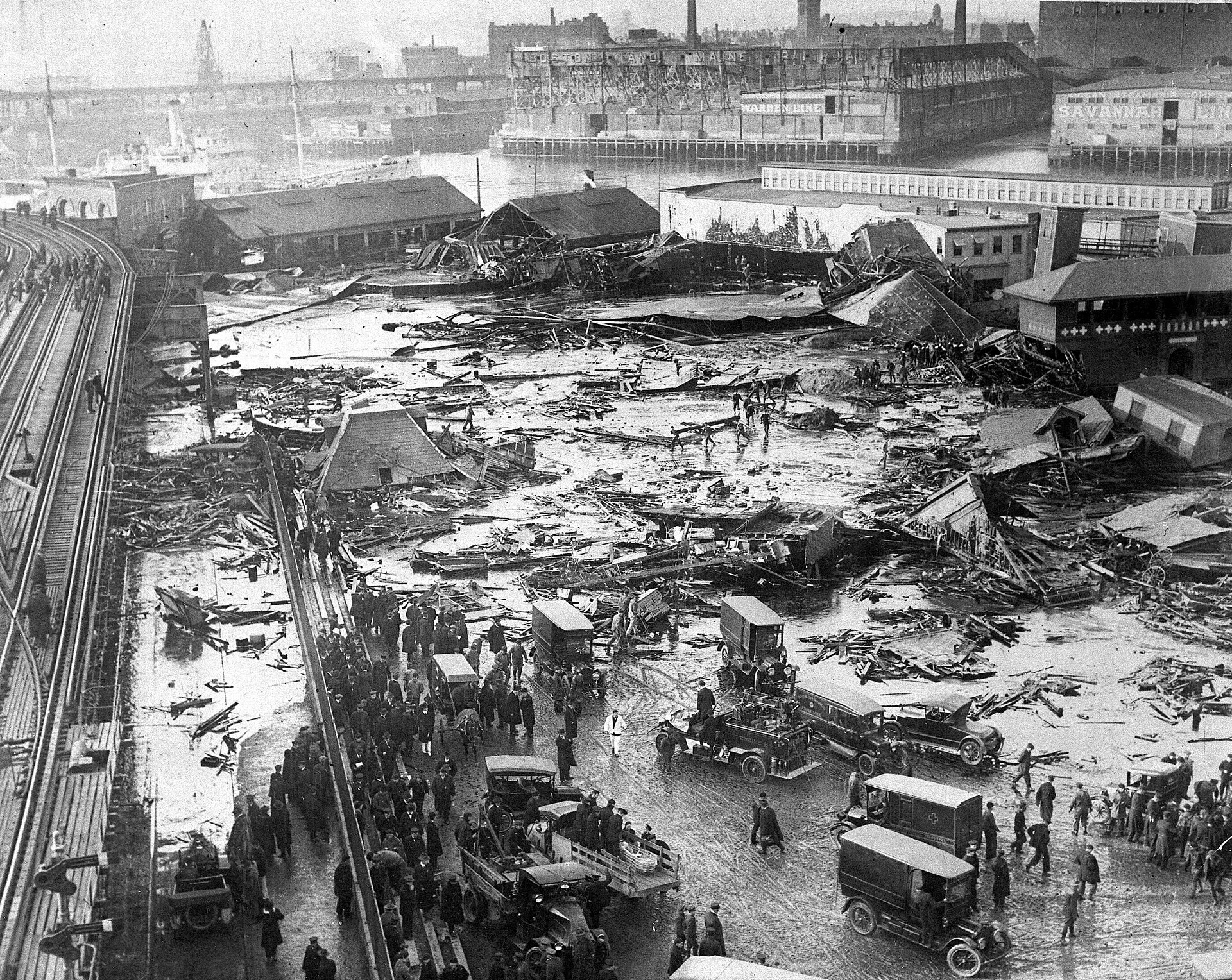
Shortly after 12:40 p.m. on 15 January 1919, a storage tank 50 feet tall and 90 feet wide burst open in Boston's North End, releasing more than 2.3 million gallons of molasses.
A wave about 25 feet high surged through the neighbourhood at more than 50 feet per second, crushing buildings and sweeping away people, horses and carts.
Twenty-one people were killed and about 150 injured.
In 2016 a team led by fluid dynamicist Nicole Sharp showed why it was so deadly. As the night fell below freezing, the spreading molasses thickened, perhaps fourfold, trapping victims and slowing rescuers.
Evidence
- Records put the toll at 21 dead and about 150 injured.
- The 2016 study, presented to the American Physical Society, used historical accounts, maps and weather records, and tested how syrup thickens in the cold.
- Harvard physicist Shmuel Rubinstein estimated that about half the victims died because they became stuck in the molasses.
What do you think happened?
You have the evidence. Stamp your verdict before you read ours.
Verdict
CONFIRMEDBacked by strong, verifiable evidence.
Thoroughly documented. The 2016 study explains why the cold made the flood so deadly.
How readers voted
Sources
Image credits
- BostonMolassesDisaster.jpg. Boston Public Library, Public domain
Published 2026-10-25. Spotted an error? Email provenmysteries@gmail.com.