The Voynich Manuscript: The Book No One Can Read
A 600-year-old illustrated book, written in a script found nowhere else. More than a century of codebreaking has not read a word.
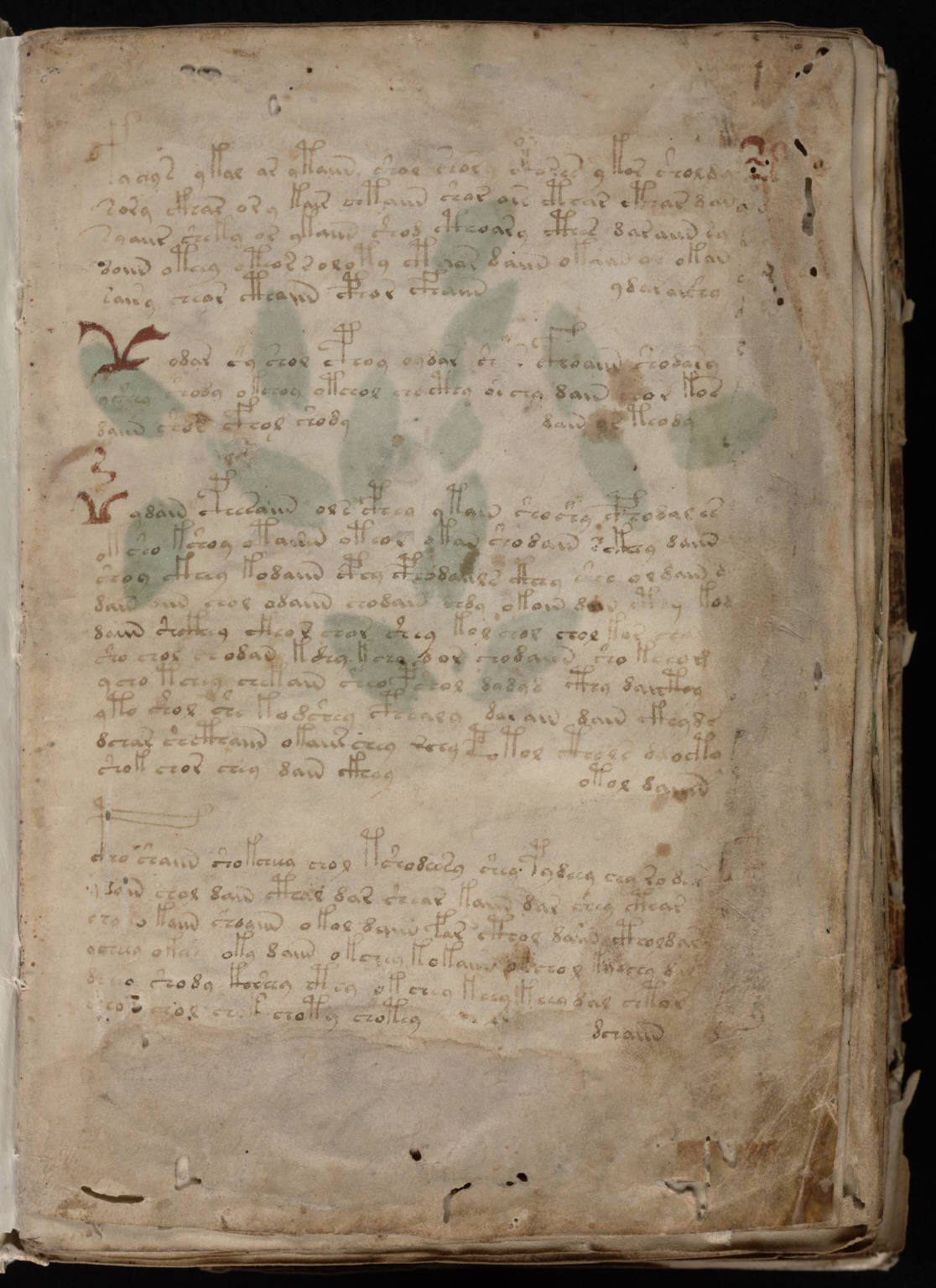
Yale University's Beinecke Library holds a small book of 102 parchment leaves. Almost every page has drawings of plants and scientific subjects, and text in a script found nowhere else.
It once belonged to the library of Emperor Rudolf II. In 1666 it was sent to the scholar Athanasius Kircher, and in 1912 the book dealer Wilfrid Voynich bought it from a Jesuit college near Rome, which is why it carries his name. It was given to Yale in 1969.
In 2009 researchers from the University of Arizona radiocarbon dated four samples of its parchment to between 1404 and 1438, about a century earlier than many had assumed.
Many people have claimed to decipher it. None of those claims has been accepted. Yale's own catalogue calls the text, for the most part, an unsolved puzzle.
Evidence
- Yale's catalogue records the language as undetermined.
- Four parchment samples, taken from different sections, all dated to 1404-1438.
- The ink itself has not been dated, so the writing could in theory be later than the parchment.
What do you think happened?
You have the evidence. Stamp your verdict before you read ours.
Verdict
UNEXPLAINEDThe event is real and documented; its cause is unknown.
The book is real and its parchment dates to the early 1400s. Its language, author and meaning are unknown.
How readers voted
Theories vs evidence
Written by the 13th-century friar Roger Bacon
RULED OUTBacon died in the 1290s, more than a century before the parchment was made.
A real language written in a cipher or invented script
POSSIBLEStatistical studies of the letters have not settled it.
A hoax with meaningless text
POSSIBLEAlso unproven. A medieval hoax would still have taken great effort and costly parchment.
Sources
- Yale University Library: Cipher manuscript (Voynich manuscript), Beinecke MS 408
- Medievalists.net (2011), Mysterious Voynich Manuscript dates back to the 15th century (University of Arizona radiocarbon dating)
Image credits
- Voynich Manuscript (3).jpg. Unknown author, Public domain
Published 2026-10-25. Spotted an error? Email provenmysteries@gmail.com.