The Dancing Plague of 1518
In the summer of 1518, hundreds of people in Strasbourg danced for days and could not stop. The city's cure made it worse.
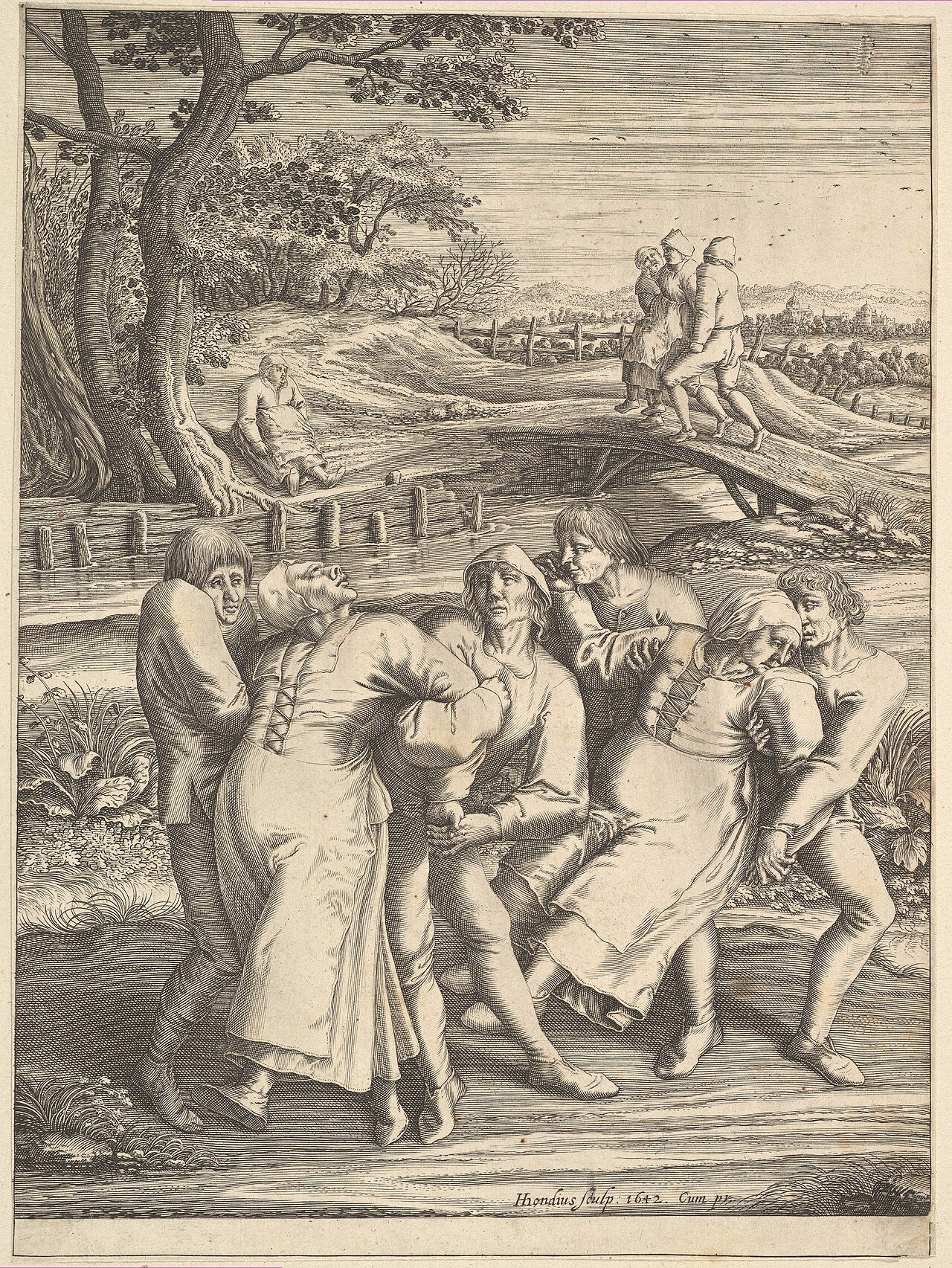
In the summer of 1518, in the city of Strasbourg, then part of the Holy Roman Empire and now in France, people began to dance in the streets and could not stop. They danced in the punishing summer heat, for days at a time.
The outbreak spread until as many as 400 people had been seized by it. One chronicle claims that at its height it killed about 15 people a day.
The city's leaders believed dancing was both the curse and its cure. They ordered the dancers to keep moving day and night, built a stage for them in the heart of the city, and hired musicians and professional dancers to keep them going. The epidemic grew worse.
The outbreak is unusually well recorded, in city orders, sermons and the writings of the physician Paracelsus. Like other dancing epidemics, it faded once the afflicted were taken to pray at shrines.
Evidence
- City orders, sermons and the physician Paracelsus left detailed records of the 1518 outbreak, so historians are confident it really happened.
- Accounts agree the dancers did not dance for pleasure: they writhed in pain, screamed for help and begged for mercy.
- Dancing outbreaks were recorded only along the Rhine and Moselle rivers, including a large one in 1374 described by dozens of chronicles.
- 1518 came after years of failed harvests, the highest grain prices in a generation, and outbreaks of syphilis, leprosy and plague.
What do you think happened?
You have the evidence. Stamp your verdict before you read ours.
Verdict
MOSTLY EXPLAINEDA well-supported explanation exists; some details remain open.
The outbreak is well documented. Historian John Waller's explanation, a mass psychological reaction to extreme hardship shaped by belief in a dancing curse, fits the records best, though it cannot be proven five centuries later.
How readers voted
Theories vs evidence
Mass psychogenic illness: extreme distress plus a local fear of a dancing curse
SUPPORTEDOutbreaks struck only where the dancing curse was feared, in years of famine and disease, and grew when the dancing was put on public display.
Ergot poisoning from mouldy rye
UNPROVENErgot can cause spasms and hallucinations, but poisoned people are unlikely to dance for days, or so many to react the same way.
Sources
Image credits
- Epileptics Walking to the Left from Pilgrimage of the Epileptics to the Church at Molenbeeck MET DP825760.jpg. After Pieter Bruegel the Elder (The Metropolitan Museum of Art), CC0
Published 2026-10-25. Spotted an error? Email provenmysteries@gmail.com.